The Complete Guide to Farm Equipment in Kenya
Published on: June 30, 2026
Agriculture remains one of the most important sectors of Kenya's economy, supporting millions of livelihoods and contributing significantly to food security. Whether you're managing a small family farm, a commercial agricultural enterprise, or a mixed farming operation, having the right equipment can make everyday work more efficient, productive, and cost-effective.
Farm equipment has evolved far beyond simple hand tools. Today, farmers have access to a wide range of equipment designed to simplify land preparation, planting, irrigation, harvesting, crop protection, livestock management, and post-harvest processing. From reliable water pumps that keep crops irrigated during dry seasons to generators that provide backup power and posho mills that add value to harvested grain, modern equipment helps farmers work smarter while reducing manual effort.
Choosing the right equipment, however, isn't always straightforward. Factors such as the size of your farm, the type of crops you grow, your available budget, access to electricity or fuel, and the availability of spare parts all play an important role in selecting equipment that delivers reliable performance over the long term.
Investing in quality equipment isn't simply about purchasing machinery—it's about improving productivity, reducing downtime, lowering maintenance costs, and creating a more sustainable farming operation. Equipment that is properly matched to your needs and maintained regularly can serve you reliably for many years.
This guide explains the different types of farm equipment commonly used in Kenya, how each category supports modern farming, what to consider before making a purchase, and practical tips for keeping your equipment in excellent working condition. Whether you're establishing a new farm or upgrading existing equipment, the information in this guide will help you make confident, informed decisions.
What Is Farm Equipment?
Farm equipment refers to the tools, machines, and accessories used to carry out agricultural activities more efficiently. These range from simple hand tools used for everyday tasks to powered machinery designed to reduce labour and increase productivity across larger farming operations.
The type of equipment required depends on the nature of the farm. A vegetable grower may prioritise irrigation equipment and sprayers, while a livestock farmer may require water pumping systems, generators, feeding equipment, and fencing tools. Commercial farms often combine several types of equipment to support planting, crop care, harvesting, storage, and processing.
Understanding the categories of farm equipment is the first step toward making informed purchasing decisions.
Farm Tools
They are manually operated implements used for everyday agricultural tasks. They are essential on farms of every size because they provide precision and flexibility for jobs that larger machines cannot easily perform.
Common examples of farm tools include: Hoes, Spades, Forks, Rakes, Slashers, Pruning shears, Machetes (pangas), Hand trowels
Farm machinery
Refers to powered equipment that performs tasks more quickly and efficiently than manual labour.
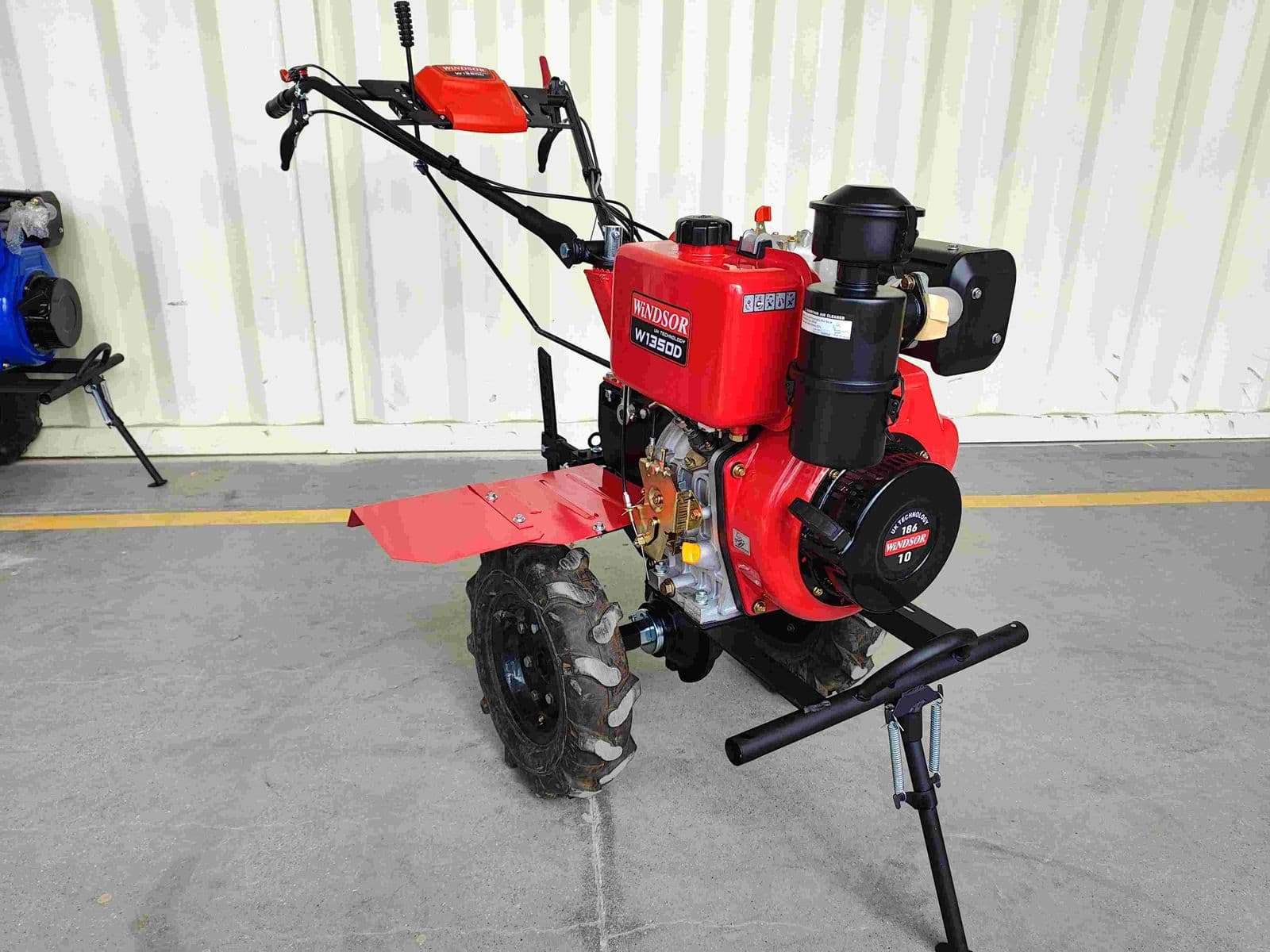
Common examples of farm tools include: Water pumps, Posho mills, Generators, Power tillers, Motorised sprayers, Chaff cutters
Farm machinery helps farmers cover larger areas, save time, and reduce physical effort, making it particularly valuable for commercial farming operations.
Farm implements
They are attachments or specialised pieces of equipment designed for specific agricultural tasks. They may be used alongside machinery or independently.
Common examples of farm tools include: Ploughs, Cultivators, Seeders, Harrows, Trailers, Irrigation accessories
Why Farm Equipment Matters
Modern farming is increasingly driven by efficiency, consistency, and the ability to do more with less time and labour. Whether you are growing crops, raising livestock, or running a mixed farming operation, the right equipment can have a major impact on productivity and profitability.
Many farmers initially view equipment as an expense, but quality equipment is often an investment that saves time, reduces costs, and improves output over many seasons.
The Biggest Benefits of Farm Equipment
- Higher Productivity - Equipment allows farmers to complete tasks faster and more efficiently.
- Reduced Labour Requirements - Many farming activities are physically demanding. Using appropriate equipment helps reduce manual effort and allows fewer people to handle larger workloads.
- Better Crop Yields - Timely farming operations often lead to better results. For example, reliable irrigation equipment can help crops receive water when needed, reducing stress during dry periods.
- Time Savings - Tasks that once took days can often be completed in hours with the right equipment.
Types of Farm Equipment
Modern farming relies on a combination of manual tools, powered machinery, and specialised equipment to improve efficiency at every stage of agricultural production. From preparing the land and planting crops to irrigation, harvesting, and post-harvest processing, each category of equipment serves a specific purpose.