The Complete Guide to Water Pumps in Kenya
Admin
Published on: June 30, 2026
Published on: June 30, 2026
Water is one of the most valuable resources for homes, farms, businesses, and industries. Whether you're irrigating crops, supplying water to livestock, filling storage tanks, or ensuring a reliable domestic water supply, choosing the right water pump is essential.
The wrong pump can result in poor water pressure, excessive electricity or fuel costs, frequent breakdowns, and unnecessary maintenance expenses. On the other hand, a properly selected and well-maintained pump can provide years of dependable performance while keeping operating costs under control.
This guide explains everything you need to know about water pumps—from how they work and the different types available to choosing the right model for your specific application. Whether you're a first-time buyer or replacing an existing pump, this guide will help you make an informed decision.
A water pump is a mechanical device designed to move water from one location to another. It converts mechanical or electrical energy into hydraulic energy, allowing water to flow through pipes to where it is needed.
Water pumps are used in many settings, including:
Although all water pumps perform the same basic function, they differ significantly in design, capacity, power source, and intended application.
At its core, a water pump works by creating pressure that moves water through a piping system. Most pumps use an impeller—a rotating component that increases the velocity of water. As the water leaves the impeller, its speed is converted into pressure, enabling it to travel through pipes to the desired destination.
The efficiency of a pump depends on several factors, including the pump design, motor power, pipe size, and the height or distance the water must travel.
Water pumps are available in different designs, with each type built to suit specific water sources, flow requirements, and applications. Choosing the right type is one of the most important decisions you'll make, as it directly affects efficiency, operating costs, and long-term reliability.
Below are the most common types of water pumps used in homes, farms, commercial buildings, and industrial settings.
Surface pumps are installed above ground and draw water through a suction pipe. They are commonly used where the water source is relatively shallow, such as rivers, ponds, storage tanks, or shallow wells.
These pumps are popular for domestic water supply, irrigation, livestock watering, and general water transfer because they are easy to install and maintain.
Related Reading: Surface Pumps vs. Submersible Pumps: Which Is Right for You?
Unlike surface pumps, submersible pumps operate underwater. Both the pump and motor are submerged, allowing water to be pushed upward rather than pulled.
Because they operate below the water level, they are highly efficient and are commonly used for boreholes, deep wells, and large-scale water supply systems.
Related Reading: Understanding Borehole Water Pumps (Internal link)
Centrifugal pumps use a rotating impeller to move water through the system. They are among the most widely used pumps because of their simplicity, reliability, and ability to deliver high flow rates.
These pumps are commonly found in industries, construction sites, irrigation systems, and commercial water distribution.
Booster pumps are designed to increase water pressure within an existing plumbing system. They are commonly installed in homes, apartments, hotels, hospitals, and commercial buildings where incoming water pressure is insufficient.
Diesel water pumps are powered by diesel engines rather than electricity. They are widely used in remote locations where grid power is unavailable or unreliable.
Their portability and high pumping capacity make them ideal for agriculture, emergency water transfer, and construction projects.
Electric water pumps are among the most commonly used pumps due to their efficiency, quiet operation, and ease of use. They are ideal where a reliable electricity supply is available.
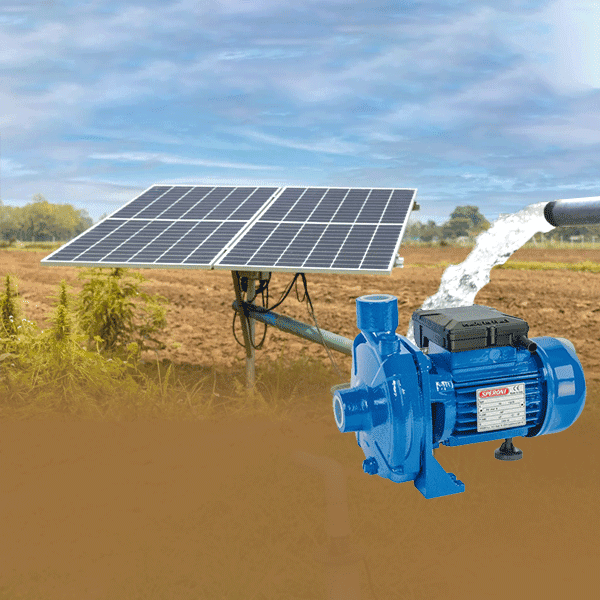
Solar water pumps use energy generated by solar panels, making them an environmentally friendly and cost-effective option for locations with abundant sunlight.
They are increasingly popular for irrigation, livestock watering, and remote communities where electricity access is limited.
| PUMP TYPE | BEST FOR | POWER SOURCE | TYPICAL WATER SOURCE |
|---|---|---|---|
| Surface pumps | Homes, Irrigation | Electric or petrol | Rivers, tanks, shallow wells |
| Submersible pumps | Borehole, deep wells | Electric | Boreholes, deep wells |
| Centrifugal pumps | Water transfer, Industries | Electric or diesel | Tanks, rivers, reservoirs |
| Booster pumps | Pressure improvement | Electric | Existing plumbing systems |
| Diesel pumps | Remote irrigation | Diesel | Rivers, pools, dams |
| Electric pumps | General water supply | Electricity | Various water sources |
| Solar pumps | Remote locations | Solar energy | Boreholes, tanks, rivers |
Selecting the right water pump isn't simply about choosing the most powerful or expensive model. The best pump is the one that matches your water source, intended use, required flow rate, and operating conditions.
A pump that is too small may struggle to deliver enough water, while one that is oversized can waste energy, increase operating costs, and wear out prematurely.
Before making a purchase, consider the following factors.
Where is the water coming from? Different water sources require different pump designs.
| Water source | Recommended Pump |
|---|---|
| Borehole | Submersible pump |
| Deep well | Submersible pump |
| River | Surface pump |
| Dam | Surface or Diesel pump |
| Water tanks | Surface or Booser pump |
| Municipal water supply | Booster pump |
Understanding your water source helps narrow your options and ensures the pump can operate efficiently.
The intended application plays a major role in selecting the right pump.
Water doesn't just move upward—it also travels horizontally.
Ask yourself:
Longer distances usually require more pressure and careful pump selection.
One of the most important specifications is head height. Head height refers to the total vertical distance the pump must move water, along with the pressure losses caused by pipes and fittings.
For example:
A pump with insufficient head may fail to deliver water effectively, even if it has a high flow rate.
Flow rate is the amount of water the pump can deliver over a given period.
It is commonly measured in:
Your required flow rate depends on the application. Below is an example guide:
| APPLICATION | TYPICAL FLOW REQUIREMENT |
|---|---|
| Small Home | Low to moderateh |
| Large home | Moderate |
| Irrigation | Moderate to high |
| Livestock | Moderate |
| Commercial building | High |
| Industrial use | Very high |
Rather than choosing the highest flow rate available, select one that matches your actual needs.
Different environments require different power options
| POWER SOURCE | BEST OPTION FOR: |
|---|---|
| Electric pumps | Best where electricity is reliable |
| - They are quiet | |
| - They are energy efficient | |
| - They are easy to operate | |
| Diesel pumps | Ideal when: |
| - No electricity is available | |
| - The pump needs to be moved between locations | |
| - High pumping capacity is required | |
| Solar pumps | A great option for: |
| - Remote farms | |
| - Off grid homes | |
| - Livestock watering | |
| - Suitable for irrigation systems |
Not all water is clean.
Consider whether the water contains:
Some pumps are designed specifically for cleaner water, while others can tolerate more challenging conditions.
Using the wrong pump in abrasive or debris-filled water can lead to unnecessary wear and reduced lifespan.
Every pump requires routine maintenance, but some are easier to service than others.
Before purchasing, ask:
A slightly higher-quality pump with good support can often prove more economical over its lifetime than a cheaper option with limited parts availability.
Operating costs continue long after the initial purchase. Choosing an efficient pump can help reduce:
When comparing models, consider the total cost of ownership rather than just the purchase price.
Choosing the right supplier is just as important as choosing the right pump. Look for a supplier who offers:
A knowledgeable supplier can help you avoid costly mistakes by recommending equipment that matches your specific needs.
When comparing water pumps, you'll notice that every model comes with a set of technical specifications. These figures describe the pump's capabilities and help determine whether it's suitable for your application.
If you're unfamiliar with these terms, they can seem confusing. Fortunately, understanding a few key specifications can make choosing the right pump much easier.
Let's look at the most important ones.
Horsepower indicates how much power the motor produces.
In general:
For example:
| HORSE POWER | COMMON APPLICATIONS |
|---|---|
| 0.5HP | Small homes |
| 1HP | Domestic water supply |
| 2HP | Small Irrigation |
| 3 - 5HP | Commercial use |
| 5HP+ | Large farms and industrial projects |
A larger horsepower rating doesn't automatically mean it's the best choice. The pump should match your actual requirements.
Flow rate refers to how much water the pump can deliver over a specific period of time.
It is commonly measured in:
For example:
A pump delivering: 100 litres per minute moves twice as much water as one delivering 50 litres per minute
However, flow rate isn't everything. A pump with a high flow rate may not lift water to the height you need.
Maximum head tells you how high a pump can push water. Think of it like climbing a hill. The higher the destination tank or building, the more head the pump needs.
For example:
| MAXIMUM HEAD | SUITABLE FOR |
|---|---|
| 20 metres | Ground-level irrigation |
| 35 metres | Small homes |
| 50 metres | Multi-storey buildings |
| 80+ metres | Boreholes |
A pump with insufficient head may still run—but very little water will reach the destination.
Suction lift refers to how high a surface pump can pull water upward before it enters the pump. Most surface pumps work effectively only within a limited suction height.
If the water source is much deeper, a submersible pump is usually the better option because it pushes water upward instead of pulling it.
Electric pumps are designed to operate on specific electrical supplies. Common options include:
Before purchasing, ensure your available power supply matches the pump's requirements.
Many buyers focus only on the purchase price. A better question is: How much will the pump cost to operate every month?
Energy-efficient pumps can significantly reduce long-term electricity costs, especially when they operate for several hours each day.
When comparing pumps with similar performance, it's worth considering their operating efficiency.
Pump efficiency measures how effectively the pump converts energy into water movement.
A more efficient pump generally:
Although highly efficient pumps may have a higher purchase price, they often provide better value over the long term.
Pipe diameter has a direct impact on pump performance. Using pipes that are too small can:
Using the correct pipe size helps the system operate as intended.
Not every pump is designed to run continuously. Ask yourself:
Choosing a pump with the appropriate duty rating helps prevent overheating and premature wear.
Here is a quick reference table to guide you:
| SPECIFICATION | WHAT IT MEANS | WHY IT MATTERS |
|---|---|---|
| Horsepower(HP) | Motor power | Determines pumping capability |
| Flow rate | Water delivered over time | Ensures enough water reaches the application |
| Maximum head | Maximum pumping height | Critical for elevated tanks and boreholes |
| Suction lift | Depth a surface pump can draw water | Helps determine pump type |
| Voltage | Electrical requirements | Must match available power |
| Efficiency | Energy conversion | Affects running costs |
| Pipe size | Diameter of connecting pipes | Influences flow and performance |
Understanding these specifications before buying can save time, money, and frustration while helping you choose a pump that performs reliably for years.
A quality water pump can only perform as well as it is installed. Even the best pump may experience poor performance, excessive wear, or frequent breakdowns if it is installed incorrectly.
Proper installation helps improve efficiency, reduce maintenance costs, and extend the lifespan of your equipment. While some installations are straightforward, more complex systems—such as boreholes, commercial buildings, or large irrigation projects—often benefit from professional installation.
The following best practices will help you get the most from your investment.
The pump should be installed in a location that is:
For surface pumps, reducing the suction distance generally improves performance.
Water pumps generate vibration during operation. Installing the pump on a solid concrete base or a sturdy mounting platform helps:
For larger pumps, anti-vibration mounts may also be recommended.
One of the most common installation mistakes is using pipes that are too small. Undersized pipes can:
Always follow the manufacturer's recommendations or seek professional advice when selecting pipe diameters.
The suction side of the system has a significant impact on pump performance. To improve efficiency:
Air leaks in the suction line can make it difficult for the pump to draw water effectively.
A foot valve helps prevent water from flowing back into the source when the pump is switched off.
This helps:
Foot valves are commonly used with surface pumps drawing water from rivers, tanks, ponds, or shallow wells.
Many surface pumps need to be primed before operation. Priming involves filling the pump housing and suction pipe with water before starting the motor. Running a pump without proper priming can result in:
Submersible pumps generally do not require manual priming because they operate below the water level.
Electric pumps should be connected using:
Electrical work should always comply with local regulations and be carried out by a qualified technician where necessary.
Dry running occurs when the pump operates without water. This is one of the leading causes of premature pump failure. Possible protection methods include:
These systems automatically stop the pump when water is unavailable, helping prevent costly damage.
Before placing the pump into daily service:
Early testing allows any installation issues to be corrected before they become major problems.
Every pump model has specific installation requirements. These may include:
Following these guidelines helps ensure safe operation and protects your warranty.